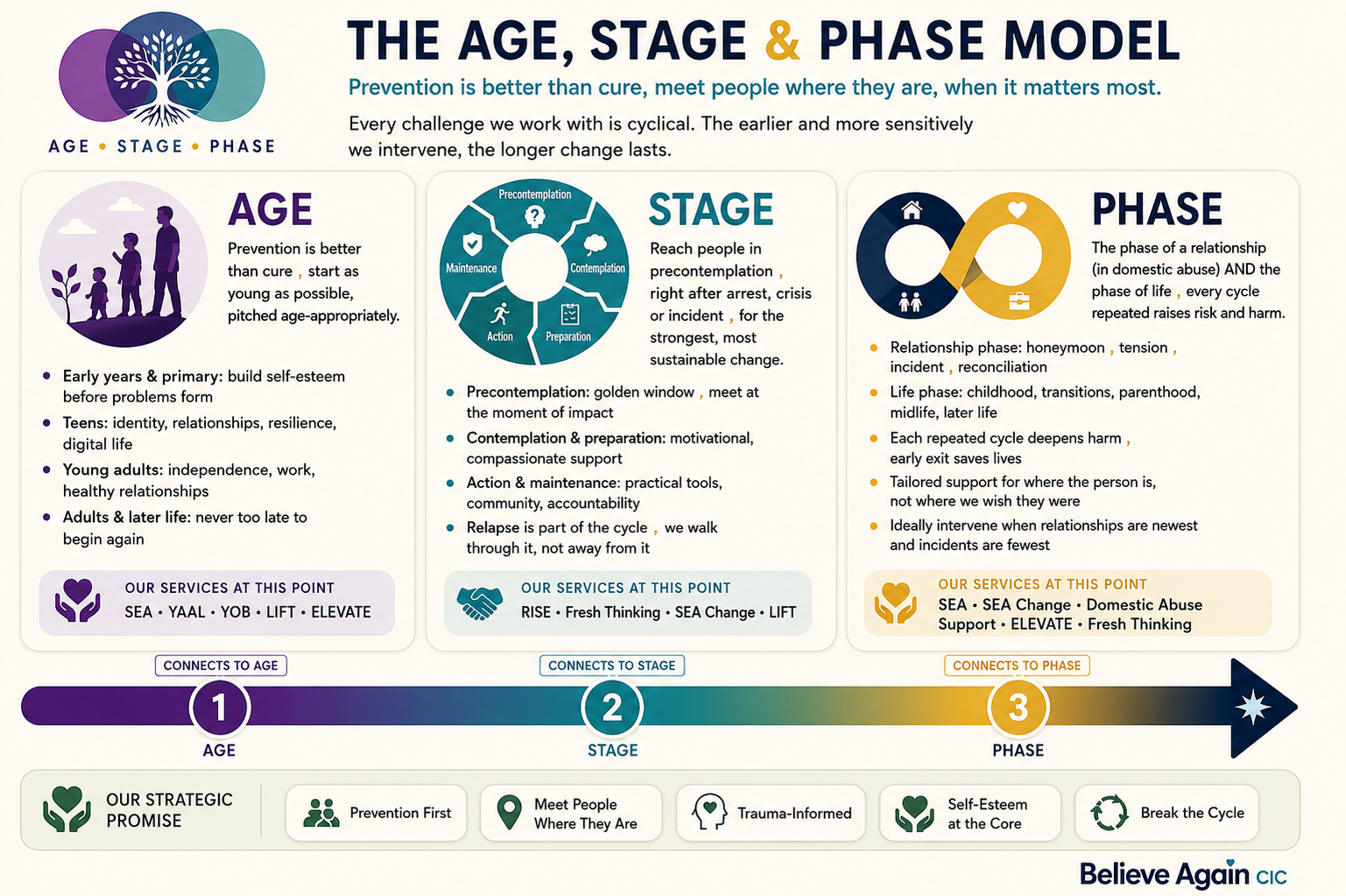
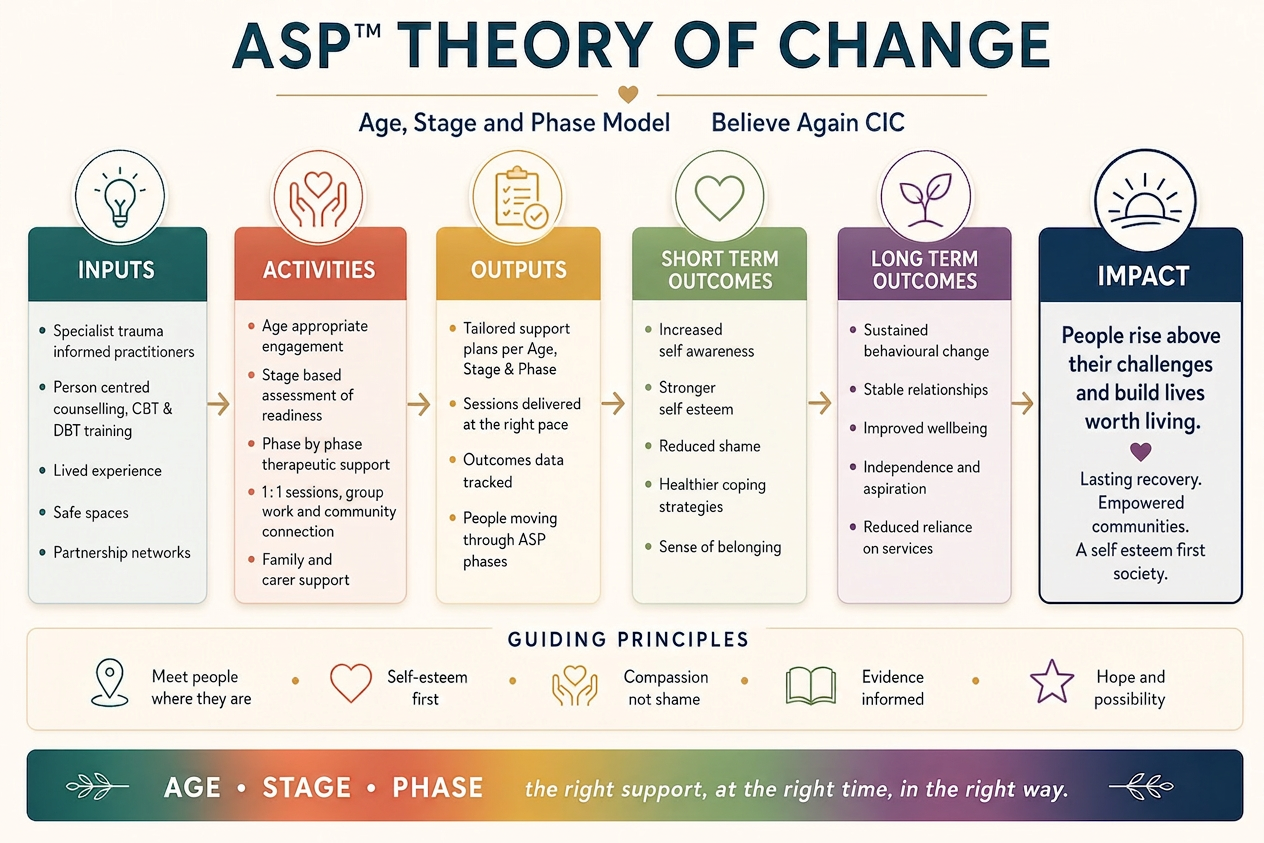
The ASP Framework™ (Age, Stage, Phase) is far more than a programme model. It is the strategic framework that underpins every Believe Again service, explaining why each one exists and when it should be used. SEA, SEA Change, RISE, ELEVATE, YOB, LIFT, Fresh Thinking and SWISS are the tools. ASP is the framework that decides which part of which tool is needed, when it is needed, and why. Most organisations focus on the problem (addiction, domestic abuse, offending, unemployment) or the service (the intervention). ASP focuses on something additional: the timing of intervention, (Age), readiness for change, (Stage), and position within a cycle, (Phase). The result is a strategic approach to prevention, early intervention and sustainable change, developed by Joanne King from 25 years of frontline practice across criminal justice, mental health, substances, impulsivity and mental health concerns, domestic abuse and family support. Joanne originally developed the Age, Stage and Phase framework in 2022 while working at MyCWA, where it was applied in the context of domestic abuse. Since leaving, she has continued to develop and expand the concepts into a broader strategic approach applied across multiple issues, sectors and services, now named the ASP™ Model. AGE, prevention is better than cure. Support should be delivered as early as possible and pitched to a person's age, developmental stage and understanding. Building self esteem, resilience and healthy coping strategies early in life reduces the likelihood of harmful behaviours becoming entrenched. This is where SEA™, Fresh Thinking and YOB play a critical preventative role. STAGE, people engage with change at different points in their journey. Drawing on the Cycle of Change, ASP recognises that services should be available at every stage, but the greatest opportunity for lasting change often comes in moments of heightened awareness: immediately after an arrest, incident, relationship breakdown or safeguarding concern. These moments move individuals from denial towards contemplation and create a powerful window for intervention. SEA Change, RISE and SWISS are particularly effective at this point. PHASE, problematic behaviours are cyclical, not one off events. Phase considers where someone sits within a relationship cycle (especially where domestic abuse, conflict or unhealthy dynamics are present) and where they sit within their wider life journey. Every repeated cycle raises the risk, impact and consequences for individuals, families and communities. Understanding a person's phase allows support to be tailored to their current needs. Ideally intervening when relationships are newest, and incidents are fewest to prevent escalation and recurrence. Together these services create a pathway from prevention through to empowerment, helping people build healthier lives, stronger relationships and more positive futures, and giving commissioners a clear, joined up model for tackling complex social issues. The right support, at the right time, for lasting change.
The Age, Stage & Phase Model
ASP wasn't something I sat down and decided to invent. It came from practice.
In 2022, while working in domestic abuse, I was preparing to speak at a conference about six prevention and early-intervention projects I was managing. I had ten minutes. There was absolutely no way I could meaningfully explain six separate projects in that time, so I started looking at what connected them.
And that's when I saw it: Age. Stage. Phase.
Who are we trying to reach, and at what age can we intervene or prevent harm? What stage of change are they at? And what phase of their circumstances are they in when intervention is most likely to make a difference?
What began as a simple way of explaining complex work became a framework for thinking about when, where and how we intervene.
The original ASP model was developed by me while working at MyCWA and was specific to domestic abuse. I have since developed and expanded the concept through Believe Again CIC so that its principles can be applied much more widely across early intervention, prevention and behaviour change.
Sometimes innovation isn't about creating something more complicated. It's about suddenly seeing the pattern that was already there.
Frequently asked questions
What is the ASP™ Model?
ASP™ (Age, Stage and Phase) is a strategic model created by Joanne King in 2022. It maps a person's age, the life stage they are in and the phase of their recovery or change journey, so support can be matched to where they actually are rather than a one size fits all pathway.
How is ASP™ used in practice?
Organisations use ASP™ to design services, plan interventions, review caseloads and improve outcomes. Practitioners use it to make sense of where a client is now, what they need next and what a safe, realistic next step looks like.
Which sectors does ASP™ apply to?
ASP™ was originally developed within domestic abuse services and has since been adapted for substance use, eating disorders, homelessness, leaving care, mental health, workforce wellbeing and whole family support.
Can we bring ASP™ into our organisation?
Yes. We deliver ASP™ training, consultancy and service design work with teams and leaders who want to embed the model. Get in touch to talk through what would fit your service.
Is ASP™ evidence based?
ASP™ draws on established trauma informed, developmental and recovery frameworks and is grounded in Joanne's frontline and strategic practice. We continue to develop the evidence base through service delivery, evaluation and partnership work.
Other ways we support
SEA™, our Self Esteem Approach™. Every challenge starts with the relationship you have with yourself, so building self awareness, self compassion and inner stability comes first.
LIFT: Let’s Improve Our Futures Together LIFT is our whole-family service, designed to empower families facing multiple and complex challenges to create meaningful, lasting change.
Fresh Thinking, our specialist eating disorder service. Trauma informed support for those affected by eating disorders, and the families walking alongside them.
YOB, Be Your Own Bestie. Bridging the gap as young people step into independence, with a consistent, believing presence.
Want to talk it through?
Reach out, we respond to every message personally.